Update, Feb 29, 2020.
Introducing the Fuji X100V.
Since I love the X100F so much, this new camera was a must-buy.
It was noted that there is a new lens with much better close focussing quality. So, I decided to test this out.
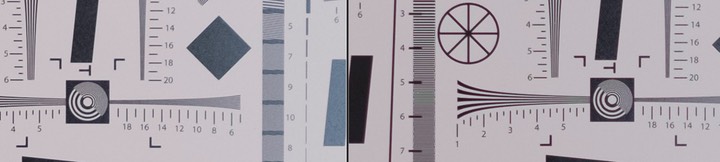
Here is the camparison at approx. 10cm (MFD) and f/2:
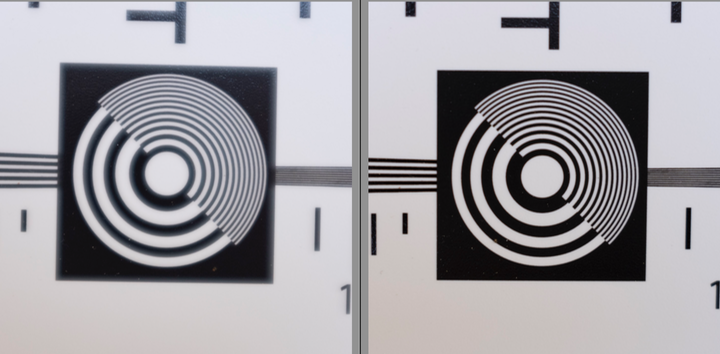
The X100F is on the left, the X100V is on the right. Clearly there is significant improvement.
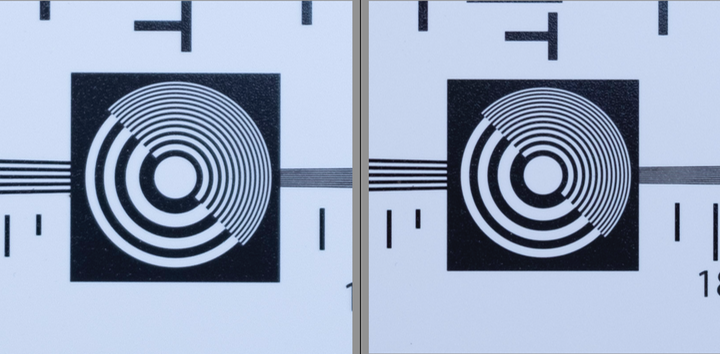
At approx 30cm f/2.8, the lenses are much closer but the new lens still looks slightly sharper:
Update, Aug 1, 2019.
Since posting the notes below, I decided that I had one too many cameras and sold of the X-Pro2 and lenses. I kept the X-100F since it is such a great street photography camera. I have experiemented with the ideal settings for street photography.
Here's the criteria:
1. Fast picture taking - no messing with dials and settings. (fast shutter, auto-ISO)
2. Set up to shoot from the hip - can't see through the viewfinder, aim approx. max chance to get focus. (Zone focus, AF-C)
Here's what I have so far:
Exposure:
Outdoors - street:
Manual - 1/500 sec, aperture as needed but default is f/5.6
ISO - AUTO1 - Max ISO 1600, Min shutter speed 1/125, default ISO 200
Indoors:
Manual - ~1/100 sec, aperture as needed but default is f/2
ISO - AUTO2 - Max ISO 3200, Min shutter speed 1/60, default ISO 3200
AF:
AF Mode: ZONE (set in the center)
AF-C
Face / Eye Detection - Face ON, Eye - Off
Shutter Type - MS
------------------------------------------------------------------------------------------------------------------------------------------
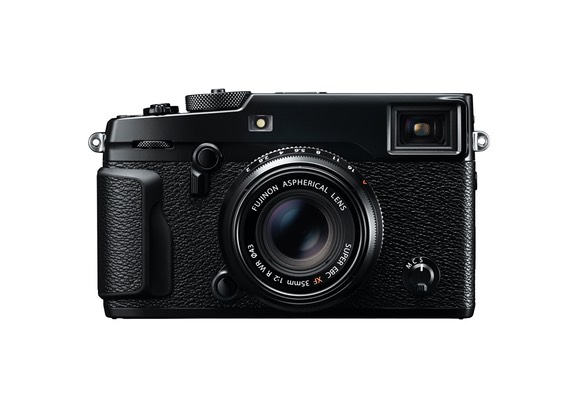
I recently purchased a Fujifilm X-Pro2. I read some great reviews (including a DPReview: https://www.dpreview.com/reviews/fujifilm-x-pro2) and wanted to see if it could be the ultimate walk-around / street photography camera. In some ways it's a bit like a Leica but without the crazy price tag. Since I started using it, I have become addicted. This is not a point & shoot casual use thing but a serious image creation tool with some unique and useful characteristics.
First, some commentary. With the proliferation of high quality mirrorless cameras, led by SONY (ex A7RII), traditional DSLR's are beginning to feel way too big. Not only that but many venues prohibit the use of DSLR's because they argue that they are "professional" cameras. So, it begins to make sense to consider smaller, mirrorless cameras, not just as a back-up for DSLR's but as a viable alternative for many shooting situations. Today the main limitation is in choice of lenses, particularly long telephoto lenses. As a result, DSLR's will continue to dominate for sports, action and wildlife photography. But for everything else, mirrorless cameras look really good.
So, the benefits are:
1. Smaller size, lighter weight. Lenses are also smaller
2. Image quality comparable to the best DSLR's (resolution , Noise, DR)
3. EVF's offer many advantages for composition and pre-visualization
4. No need for lens focus calibration
5. Some unique features such as eye-AF
The downsides are:
1. In some cases ergonomics - menus/UI, small buttons, hard to adjust while looking through the viewfinder - SONY is the main culprit here.
2. Slower AF & subject tracking although this is improving rapidly.
3. Short battery life (EVF & rear LCD take a lot of power)
4. Less responsive than DSLR's (on, off)
5. Less rugged, lacking weather-sealing
6. Lack of choice on lenses
There's also the intangible "feel" of a camera which can make a huge difference. For example, despite the large size, I really like the "feel" of my Nikon D810 (and D500). It just begs to take pictures. The buttons are all in the right place and I can quickly change settings on the fly. It is nicely balanced with larger lenses. The battery lasts a long time.
On the other hand, while I admire the SONY A7R II for it's image quality and small size, I constantly hit the wrong buttons and I find it frustrating to try to navigate the menu system. As a result, the SONY just doesn't feel "right".
One of the reasons I really like the Fuji X-Pro2 is that it feels totally right in my hand. Probably more so than any other camera. Part of this is that there are dedicated dials for shutter speed, ISO and exposure comp. Plus, the lenses have aperture rings (which I love) so there's plenty of dedicated manual control (I hate menus). And, the lenses are small, really high quality, and fast. So, picture quality is not lens-limited. The camera (and lenses) have a quality "feel" to them, probably not as much as Leica but there again . .
Some things to cover:
1. Flash with the Nissin system (works well)
Manual, third party lenses (exposure and manual focus)
One of the lenses I purchased was the Rokinon 12mm f/2 NCS CS. I got it for $289. The 35mm equivalent is 18mm f/2.8. It is a fully manual lens. The exposure system on the camera will work for auto exposure. However, the camera will not "know" the aperture setting. This will only be indicated on the aperture ring on the lens. Here are recommended settings for manual lenses:
a. Set "SHOOT WITHOUT LENS" to ON (Setup menu -> Button / dial setting -> shoot without lens)
b. Set camera to "M" (on front of camera)
c. Set "MF ASSIST" to "Focus Peak Highlight White (Low)". Shooting menu -> AF/MF SETTING -> MF ASSIST. This is the setting and color that works for me. Your preference may be different.
d. Set EVF BRIGHTNESS to Manual (0). Setup Menu -> SCREEN SETTING -> EVF BRIGHTNESS -> Manual. This maintains EVF brighness at a constant level independent of aperture.
d. For manual focusing, use the EVF (or the rear LCD). Press the real dial button momentarily to zoom in. Focus peaking should help to get accurate focus. If you're not afraid of focus shift, focus at max aperture then change the aperture to the desired setting without refocussing.
Film presets and RAW to jpeg conversion - in-camera (a revelation and promotes the use of jpeg)
As a film manufacturer, Fuji should know a thing or two about film characteristics. They have taken this knowledge and embedded a number of film modes into the camera. These include the following:
Provia/Standard (default)
Velvia/Vivid
Astia/Soft
Pro Neg.
ARCOS
Monochrome
Sepia
There are many ways to customize these modes by adjusting noise, color, contrast, sharpness, white balance. These can all be stored in up to 7 custom settings selectable under IMAGE QUALITY SETTINGS. A number of people have created their own settings which I have programmed into the camera:

As expected, these settings are only applicable to Jpeg images. However, the Jpegs they create are really good, especially if the destination is Instagram or other on-line services. It begins to make you re-think the value of Jpeg versus RAW. But, there's more! The camera also has RAW conversion built in. So, if you take a RAW image, it can easily be converted into Jpeg with any of the standard preset film settings (unfortunately, the Custom settings are not selectable for RAW conversion but you can modify the standard settings manually).
4. Camera bags for small, mirrorless
5. Fuji replacement for the Bayer color matrix, rendering and noise aesthetics
Instead of a Bayer Matrix, the Fuji cameras use their own proprietary color matrix call X-TRANS. From the articles below, it has its pros and cons. Pro: low Moire w/o anti-ailiasing filter, good for B/W. Cons: Color rendering issues at high ISO
Overall, I like the rendering style of the X-Pro2. It feels more film-like especially since the standard film settings can be applied to RAW images in Lightroom. Further, at high ISO's the noise looks more random and less digital, again, givin a more film-like appearance.Unfortunately, not all RAW converters support the Fuji X-TRANS method (DXO Optics Pro). Further, even when they do, rendering speed is much slower than with Bayer (Lightroom)
Some references:
An opposing view:
https://petapixel.com/2017/01/27/x-trans-promise-problem/
6. Software app limitations
7. Other Fuji cameras
I also purchased the Fujifilm X100F. This is a fixed lens (23mm f/2) rangefinder camera which is more compact than the X-Pro2 but uses the same image sensor. It looked like the ideal street photography camera. I also had the thought that I could carry two cameras - X100F for 23mm (35mm equiv) work and the X-Pro2 for everything else. I need toi try this in practice.
I found out right away that the X100F has some subtle quirks that make it different from the X-Pro2:
1. The X100F has a leaf shutter (an iris which opens & closes versus a barn door). This has the advantage of enabling high speed flash sync (up to 1/1000sec) but also has the artifact that it limits the maximum shutter speed, depending on aperture. The explanation is that it takes longer to open the iris to larger apertures hence this limits how fast the shutter can operate. Here is what I measured as the fastest shutter speeds, versus aperture:
f/2 1/1000sec
f/2.8 1/1250sec
f/4 1/2000sec
f/5.6 1/2500sec
f/8 1/4000sec (maximum for the mechanical shutter)
At first sight I saw this a s a significant limitatitation. After all, being able to take shallow depth of field images in bright sunlight isn’t that unusual. Fuji, in there wisdom, have two workarounds to this problem.
a) Electronic shutter (see Note 1). This allows shutter speed up to 1/32,000 sec independent of aperture. This is good for static subjects but electronic shutters can cause severe “rolling shutter effect" with fast moving subjects due to the sequential read-out of the image sensor while using this mode. While I’m not sure of the read-out time for the X100F, cameras can take anywhere from 1/10sec to 1/100sec for complete readout. Another issue with electronic shutters is banding effects when photographing in artificial light, especially LED lights. To avoid this issue you need to set low shutter speeds which can be a problem. Also, the electronic shutter won’t work with high speed flash sync. and also only supports AF-S (no focus tracking)
b) 3-stop ND filter. This is included as a selectable menu item on the X100F. For situations where you want shallow depth of field and exposure needs to be faster than 1/1000sec at f/2, you can select the ND filter and this will give you 3 stops of extra shutter speed (1/8000 equiv). This is a nice addition but has the downside of needing to be selected from the menu. Perhaps it can be assigned to a function button?
2. The X100F lens, while of high quality, has the characteristic that, at short focus distance (near or at MFD) and wide open aperture, it appears soft. At longer distances and at smaller apertures, the lens approaches the same sharpness as the 23mm f/1.4 on the X-Pro2. At 10ft, f/2 on both lenses, sharpness is identical. Aparently Fuji have “featured” this as a way to get nice soft, shallow depth of field, portraits but I don’t buy it. Workarounds are as follows:
a) If you want to take close-up images (MFD is 10cm), stop down to f/4 or smaller. There’s still plenty of Bokeh to go around.
b) Use the X-Pro2 with the 23mm f/1.4 lens which seems to not have this limitation
Tests.
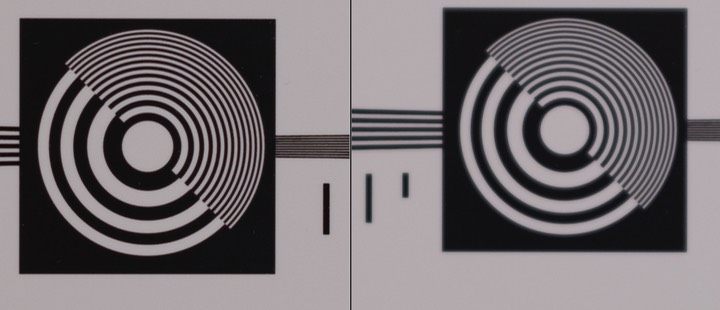
The following shows the difference between the X100F @f/2 versus X-Pro2 / 23mm f/2 at ~30cm. X-Pro-2 on the left, X100F on the right.This clearly shows the softness in the X100F lens compared to the X-Pro2

The next compares at f/2.8 / 30cm
The next compares f/4 / 30cm
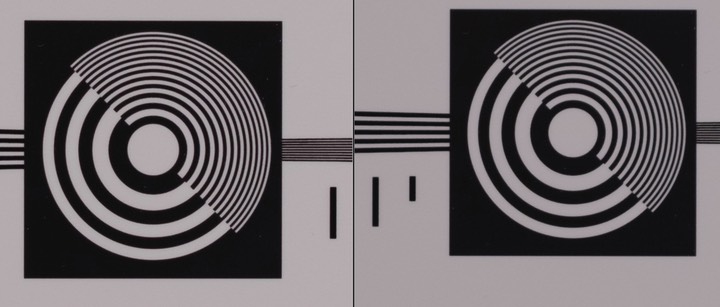
The next compares f/5.6 / 30cm

The next compares f/8 / 30cm
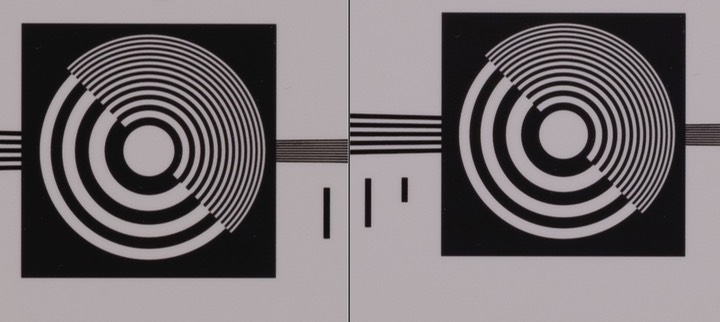
From the images above, it looks like the two lenses become equivalent at around f/4 - f/5.6. So, use this as a guide for close-up work with the X100F.
Next I tested at f/2 at various distances.
Here’s F/2 @60cm. Hard to see but still soft on the X100F
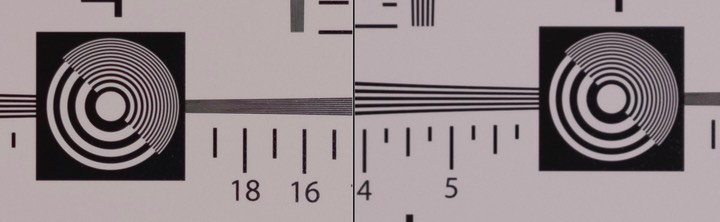
Next, f/2 @120cm (47”). At this distance, the images are very similar
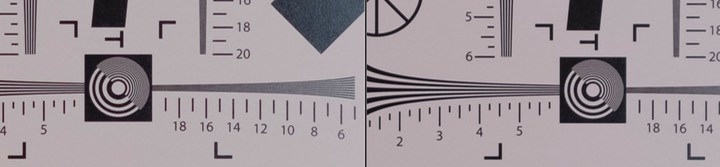
Next, f/2 @ 200cm (79”). I couldn’t see any sharpness difference
Conclusion.
1. If you want to operate the X100F at f/2, shoot at 3 - 4ft or more for best sharpness
2. If you want to shoot close in with the X100F, pick a largest aperture in the f/4 - f/5.6 range
NOTE 1. Since the leaf shutter is located inside the lens, directly above or below the aperture blades, and it operates similarly to the aperture diaphragm, there will be functional interaction between the two units. In practice, the aperture blades need to be fully open before the shutter closes (stop live view and flush senor pixels), then opens and closes again (to begin and end exposure), plus re-open for live view. The entire sequence will always take the same time; shutter peed is simply determined by the time delay between the 1st pair of shutter blades opening and the 2nd pair of blades closing (analogous to a focal plane shutter).
At shutter speeds of 1/1000s or shorter, the second blade pair will start to close before the 1st pair has fully opened the shutter opening. That is, the leaf shutter will start to act like the aperture blades, thus limiting aperture opening and forming a different aperture shape (diamond instead of circle). You can see this if you set the camera in manual exposure mode and select an aperture/speed combination that is outside of the specified range: You'll get vignetting and fairly irregularly shaped confusion "circles" in out-of-focus image regions.
+++
Note however that the electronic shutter has another functional limitation, the "rolling shutter" effect. In this situation, the sensor would theoretically need to be flushed (reset pixels to black), started and stopped for exposure in strict synchronization. This would require to control all pixels in parallel, which is very expensive to manufacture, and would require substantial drive circuitry overhead. I reality, pixels are controlled and read sequentially (i.e. one after the other).
This however will result in a different control sequence for flushing, exposing and reading out: For shutter speeds above a certain speed limit, the electronic shutter behaves a bit like a focal plane shutter: Exposure start and stop effectively travels across the sensor as a "wave" *, much like the slit between the leading and trailing curtains of a focal plane shutter. This will lead to strangely deformed pictures when shooting fast moving objects, and produce the same problems in flash photography when using speeds above the FP shutter sync speed: black stripes on top and bottom of the image.
So, the electronic shutter won't replace the ND filter for flash photography.